Introduction
This blog post contains highlights from our monthly metrology newsletter, which is sent out in the last week of the month.
In May’s Newsletter, we covered:
- The importance of World Accreditation Day and the history behind legal metrology certification in the UK.
- The key proposed legislative changes from the King’s Speech and what this means for British Manufacturing.
- What is the true cost of certification?
- How the Ancient Egyptians invented metrology.
Industry News
World Accreditation Day
Following closely behind the recent World Metrology Day, the 9th June is World Accreditation Day. This year’s theme is innovation, trust and sustainability: the power of accreditation.
The day is celebrated by the Global ACI and spotlights the role that accreditation and conformity assessment play in building trust with consumers. Helping businesses to compete on a level playing field and increasingly ensures sustainability.
The Chair of Global ACI, Brahim Houla, said, “As technology evolves and sustainability expectations grow, progress needs proof. Accreditation helps ensure new solutions are reliable. It demonstrates that they meet the requirements of regulators, signifies credibility and instils confidence with potential customers. Accreditation also helps drive internal efficiencies and improves company culture.”
Did you know that calibration was the first thing to be accredited in the UK? With the establishment of the British Calibration Service in 1966. In 1985, this was merged with testing accreditation and the National Measurement Accreditation Service (NAMAS) was formed. It wasn’t until 1995 that one national accreditation body was created, the UKAS that we know today.
World Accreditation Day exists to promote discussion around the importance of accreditation and encourage more companies to seek accreditation. As a UKAS and Global ACI Accredited Conformity Assessment Body (CAB), we are proud to play a part in the crucial role conformity assessment has on product safety, business growth and operational guidance.
You can find out more about World Accreditation Day and how you can get involved by clicking here. Alternatively, if you are looking to achieve certification for your weighing and measuring instruments, or ISO 9001 Certification, then do contact us to find out how we can help.
The King’s Speech and Its Impact on British Manufacturing

The recent King’s Speech took place on the 13th May 2026. During the speech, the government disclosed that manufacturing, infrastructure and industrial resilience would be central to the UK’s economic growth plans. Here are the key proposed legislative changes for the upcoming parliamentary year:
Steel Industry (Nationalisation) Bill: The government is currently consulting on how to safeguard the UK production of Steel. This could include bringing British Steel under formal state ownership to improve security and increase production.
Energy Independence Bill: Recent global events have highlighted the importance of Britain achieving more independence when it comes to producing energy. It is proposed that homegrown renewable energies be invested in and fast-tracked. Alongside this, there will also be some reforms to the Nuclear Regulation Bill to enable the UK to produce more of its own energy.
Small Business Protection (Late Payments) Bill: Late payments and drawn-out payment terms have long been a problem for SME’s. The bill is currently progressing through Parliament and will put a 60-day legal cap on payments from larger businesses to smaller ones. Protecting them and enabling them to invest in business growth.
European Partnership Bill: As the UK moves closer to the EU, it is proposed that new legislation will come into play to make exporting simpler and improve the supply chain, aiding economic growth and making it easier to trade.
We look forward to seeing how these policies aid and improve growth. You can view the speech in full by clicking the link here.
UKMB News & Advice
The Real Cost of Certification
Having the correct certifications in place for the placement of weighing and measuring instruments on the UK market is becoming more important than ever before. This is supported by the current government consultation on how to better enforce the regulatory framework to aid business growth and keep consumers safe.
With 2026 widely being referred to as the year of quality, there is an increasing need for businesses to be able to demonstrate that they have invested in their quality systems and processes by having ISO 9001 certification in place.
We know that this can seem like a significant investment, particularly when other business costs are rising. However, having ISO 9001 certification in place increases profitability, reduces your costs, helps you to make evidence-based decisions, and improves customer satisfaction. In fact, research from Hexagon ETQ found that “…the cost of poor quality can be 10 to 20 per cent of total revenue, with the hidden costs as much as four times greater than the visible costs.”

As all audits are different, we can’t provide a fixed cost for certifications before your application, as costs are based on:
- The scope of your audit and the certifications required
- How many standards you require
- How many sites the audit needs to be conducted across, and the location of those sites
- How many people are involved in the scope of certification
If you would like to find out more about the cost of becoming certified, you can submit an application via our website. Alternatively, you can give us a call on 01727 582023, send us an email info@ukmb.org, or submit an application via our application page.
We recently worked with New City Scales to transfer their existing NAWI Module D and ISO 9001 Certification. We were very happy to receive this wonderful piece of feedback on us and one of our Auditors, Damian Chester. The feedback was as follows:
“Thank you for getting the audit and certifications over to us so promptly. We really appreciate you guys getting this through so quickly.
Damian – I really appreciated the depth of the audit report. It is very refreshing to see how much of our QMS and processes you managed to absorb during your visit. We are very happy with the whole process and look forward to working with you all going forward.“
Dean Mollison, New City Scales.
Have you spotted any glasses out and about with our approved body marking?
May was a busy month with audits, certifications and technical reviews. But as the weather improves, our team have been finding out about ancient weighing practices and partaking in some outdoor activities that involve glasses with our Approved Body marking on (8528).
This one was spotted at Newmarket Racecourses by our Auditor, Damian Chester.
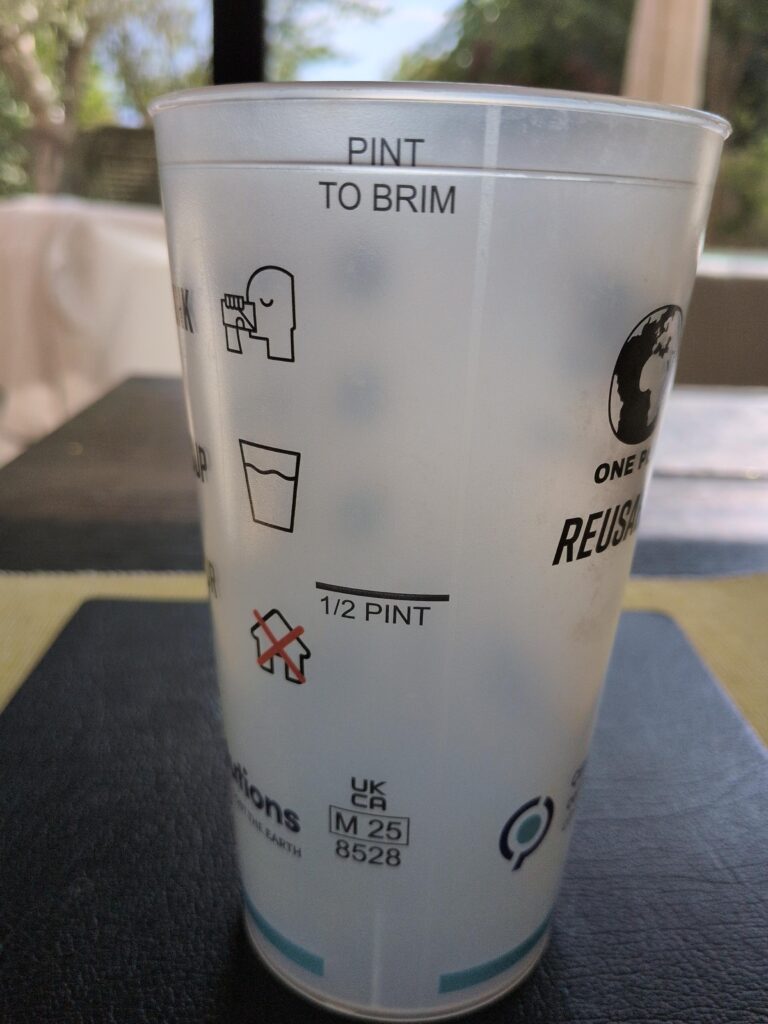
Do let us know if you spot one of our glasses in a pub, at a sporting event or at a festival.
Alternatively, if you are planning on manufacturing printed or branded glassware, you will need to apply for Module A2 or E1 Certification to ensure your instruments are compliant with marketplace legislation. You can find out more about the legislation and requirements by reading our blog post.
Ancient Weighing Practices in Egypt
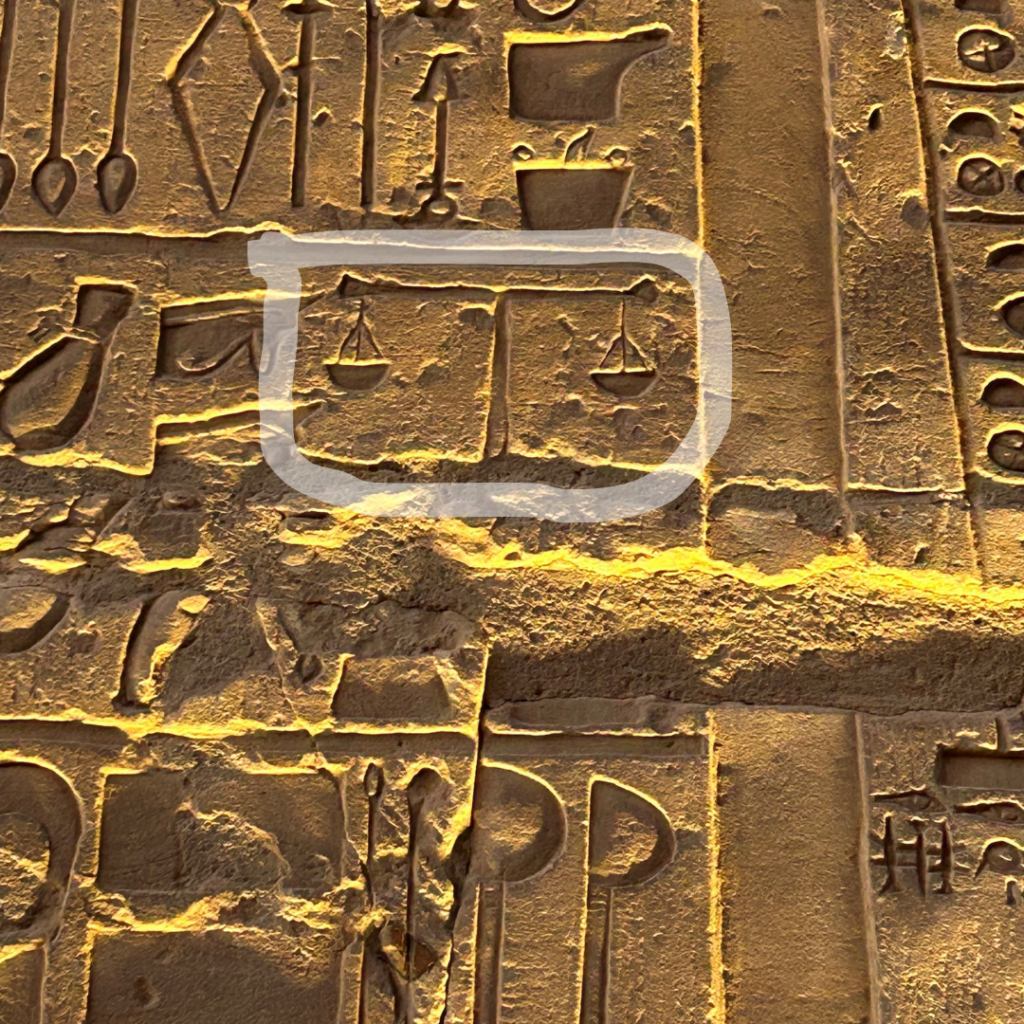
This photo was taken by our administrator, Christine Goodacre of Cognition Association Management, on a recent trip to the Temple of Kom Ombo in Aswan, Egypt. We’ve highlighted the weighing scales below.
The temple was built in the Ptolemaic era, 180-47 BC; it is thought that the scene represents a set of surgical instruments (top row), with a balance for weighing and dispensing herbal medication. The pouches/containers for the herbs are depicted in the middle row, and the tools for removal of organs for the mummification process are shown in the bottom row.
The ancient Egyptians pioneered metrology around 3000 BCE, enabling them to build the pyramids and to track land boundaries after Nile floods, with the earliest recorded unit of measurement being the Royal Cubit, which was the length of the Pharaoh’s forearm plus the width of their palm.